


REPORT ON A RADIO DISCUSSION ON CHILD LABOUR DURING WORLD DAY AGAINST CHILD LABOUR 2026
Introduction
The World Day Against Child Labour is an international observance held every year on 12 June to raise awareness about child labour and promote efforts to eliminate it worldwide. It was launched in 2002 by the International Labour Organisation (ILO) to draw attention to millions of children who are engaged in work that is harmful to their health, education, and development.

Objectives of the day include: to raise public awareness about the problem of child labour, promote children’s rights to education, promote a safe childhood, encourage governments, organisations, communities, and individuals to take action against child labour and support policies and programmes that help remove children from hazardous work and provide them with access to education. The theme for this year’s child labour day is ‘Red card to child labour, Fair play for children, Decent work for adults.’
Discussions
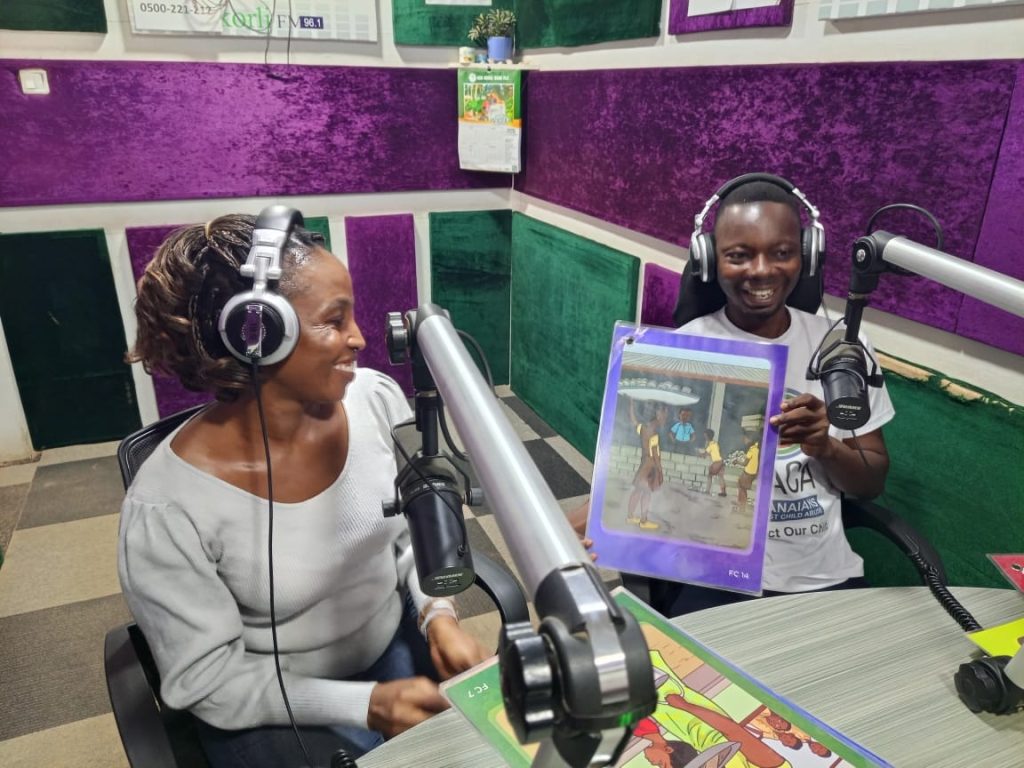
To commemorate the day, a radio discussion was held at Okorli FM, a community FM Station in the Ada West District, Sege. The discussion focused on the issue of child labour in conformity with Section 87 of the Sub-Part 1 of the Children’s Act 1998 (Act 560), and its effects on children, families, and society. The programme was hosted by a radio presenter named Mr. Solomon Narh and featured two (2) staff of the Department of Social Welfare and Community Development. The discussion aimed to create awareness about child labour, its causes, consequences, and possible solutions.
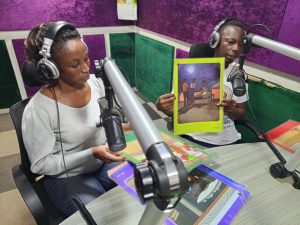
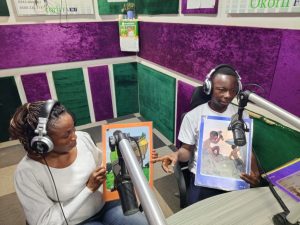
The panelists explained that child labour refers to work that deprives children of their education, health, and dignity. They noted that while children may assist their families with light household chores, child labour involves activities that are harmful, exploitative, or prevent children from attending school. These hazardous activities which were also pictorially presented, included sea work, quarry work, carrying of heavy weight, working in bars and clubs where immoral behaviour is common, especially during school hours.
According to the speakers, children in the Ada West District continue to engage in child labour, especially in sectors such as fishing, street hawking and agriculture. They stressed that child labour remains a serious problem especially in the area of fishing, with male children dominating this sector, while their female counterparts dominate the area of hawking.
Though the discussion highlighted poverty as one of the major causes of child labour, it also stressed on difficulty of parents to understand child labour and its effects on children. They further discussed the negative effects of child labour, emphasising that children involved in hazardous work are exposed to accidents, injuries, and health problems, and are denied the opportunity to attend school regularly, which affects their future prospects.
Phone In Session
A couple of callers raised pertinent concerns during the discussion. For instance, one caller indicated that in some communities, fishing remains the only occupation and government has not provided schools for the children there. Children have had to travel by boats to school, which equally endangers their lives. Hence, community members in collaboration with Action Aid have borne the responsibility of providing the schools. Though they allow the children to attend school, they equally require of them to assist them with fishing for income generation.
In response, the discussants stated that, the law does not make provision for exceptions in matters of engaging children in labour. Irrespective of who provides the schools, the law stipulates that children under the age of eighteen (18) years shall not be engaged in hazardous work at the expense of school.
Key Messages from the Programme
One of the main messages from the discussion was that every child has the right to education, protection, and a safe environment. The speakers stressed that children should be in school and not engaged in dangerous or exploitative work. They encouraged communities to report cases of child exploitation. Parents were advised to prioritize their children’s education and well-being rather than relying on them as sources of income.


Lessons Learned
The radio discussion taught that child labour is not only a violation of children’s rights but also a major obstacle to children’s bright future and national development. When children are denied education and forced to work, society loses future professionals, leaders, and skilled workers.
Also, poverty alone does not justify child labour. Hence a collaborative effort is required to ensure that communities work together to protect children from exploitation.
Conclusion
Conclusively, the radio discussion was informative and enlightening. It increased public awareness about the causes and consequences of child labour and highlighted the need for urgent action. The programme emphasised that every child deserves a safe childhood, quality education, and opportunities to develop their full potential. By working together civil society organisations, development partners, government in 2023 formulated the Ghana Accelerated Action Plan Against Child Labour (National Plan of Action for Elimination of Child Labour 2023-2027) in the bid that, government, communities, families, and civil society organisations and development partners can help eliminate the worst forms of child labour by 2027 and in line with the Sustainable Development Goals (SDG) create a better future for all children.
Reccommendation
More sensitisation is recommended to create more awareness and for a better understanding of the severity of child labour and its effects on children now and in the future. Awareness creation is also necessary in ensuring that parents understand their responsibilities towards their children and the punishments that have been prescribed for perpetrators of child labour.
DEPARTMENT OF SOCIAL WELFARE AND COMMUNITY DEVELOPMENT, AWDA
SEGE
Friday, June 12th, 2026