


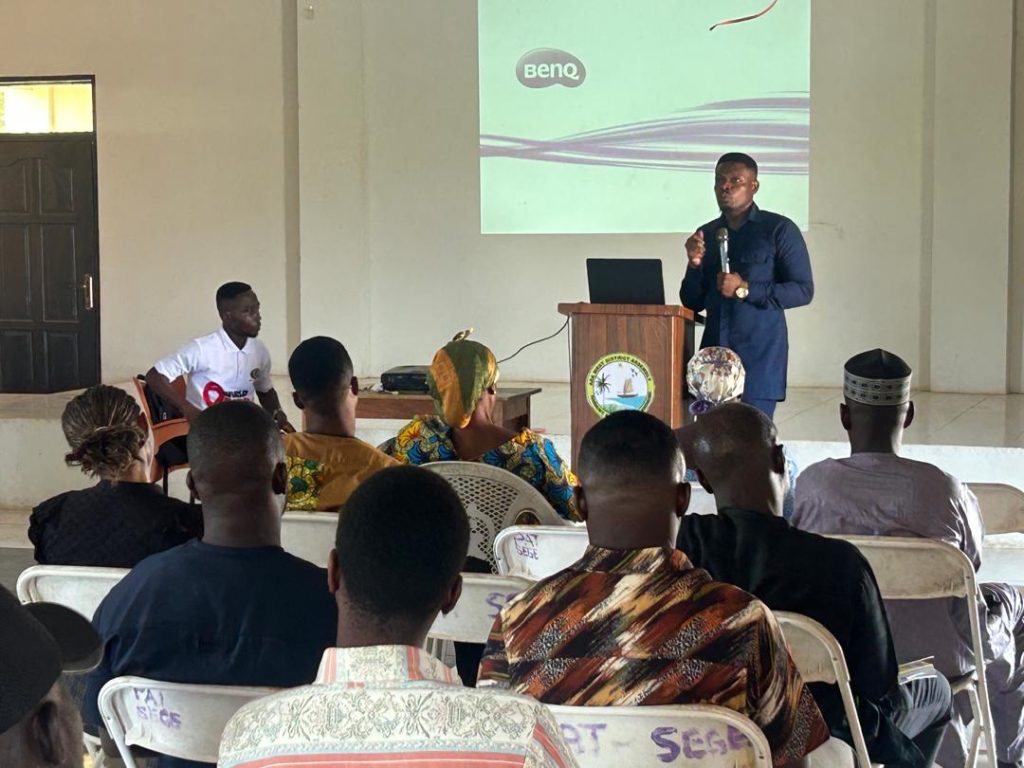
AWDA HOLDS STAKEHOLDER MEETING ON HIV/AIDS SENSITIZATION AND BEHAVIORAL CHANGE
The Ada West District Assembly (AWDA) in collaboration with the Ada West District Health Directorate on Thursday, 30th April 2026 held a stakeholder meeting on HIV/AIDS sensitization and behavioral change.

The purpose of the engagement as disclosed by the HIV desk officer of the AWDA, Mr. Michael Boamah was to educate stakeholders including community leaders and to ensure that they play key roles in HIV sensitization and education in order to curb the prevalence rate of the disease in the district which currently stands at 2.36% (above the national rate of 1.49%) of an estimated district population of 85,000 plus. The meeting was also to create platform to review the district strategies adopted so far in addressing the HIV menace and also to discuss practical ways to intensify education in the various communities to “achieve sustainable behavioral change”.
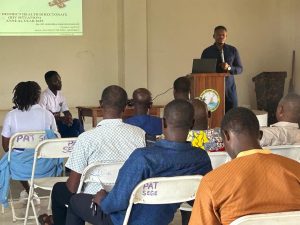

The District Health Director, Dr. Maxwell W. Onassis-Fiadjoe who was the keynote speaker and made presentation on “National HIV Estimates” indicated that since the disease was first reported in 1986, there had been lot of efforts made to control the disease and the goal was to reduce the trend.
Dr. Onassis-Fiadjoe explained in details four (4) national objectives committed to reducing the HIV trend which include; developing interventions to reduce HIV transmission, providing care and support services for people living with HIV (PLHIV), providing timely information on HIV/AIDS for action, and providing essential technical support to all MDAs in the implementation of their programs. Other objectives spoke about by the Health Director to ensuring that the disease is brought under control are; prevention and management of opportunistic infections, provision of Anti-Retroviral Therapy (ART) and continuous support counseling, provision of home based care and involvement of PLHIV/AID in sensitization programs.

The Health Director also talked about comprehensive care actions taken to ensure that the objectives stated supra to reduce the HIV trend are achieved and these include; testing regime, Prevention of Mother to Child Transmission (PMTCT) intervention services, prevention and management of Sexually Transmitted Infections (STIs), HIV prevention through use of condom, ensuring safe blood transmission, and HIV exposure prevention in the healthcare settings.
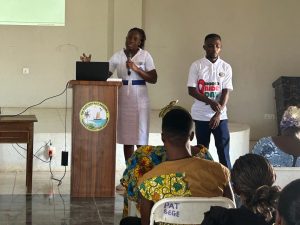
Madam Dorcas Siaw, the District Health Directorate HIV focal person on her part shared the situational analyses (data) on the district’s prevalence rate with the stakeholders and indicated, that, out of the projected District HIV infection figure of 1,229 for 2025, out of the Ada West District population figure of 85,000 plus, only about 200 people (tested positive) are on treatment currently, suggesting that there may be good number of people living with the disease in the communities. There is therefore the need for more sensitization and education especially on the efficacy treatment regime to encourage voluntary testing so that those who may be tested positive can subject themselves to the treatment regime for a healthy life.
Both the District Health Director and the District HIV focal person commented on some challenges faced in the fight against HIV menace in the district namely; superstitious beliefs that hinder patronage of those tested positive in routine treatment, stigmatization and discrimination among PLHIV, lack of contact numbers and traceable addresses of old clients, inadequate funds to carry out activities, and lack of office space in some of the sub-district.


On stigmatization and discrimination, both the Health Director, Dr. Maxwell W. Onassis-Fiadjoe and the HIV focal person, Madam Dorcas Siaw talked about the efficacy of the treatment regime and indicated that unlike the early days where it was possible to see somebody on the street and you could speculate that he or she may be a carrier, today, it is difficult to determine who is a HIV positive person because of the effective treatment regime once one has submitted to the treatment protocols. This, the Health Director said, if people get to know through effective sensitization and education, they would embrace the treatment regime and this would reduce the trend of the disease especially so because adherent to routine treatment can reduce the viral level of an infected person to a very low level such that he or she may not be able to transmit the disease.
The engagement was participatory as participants asked relevant questions and answers provided by the resource persons. Key concern raised by some participants was about non-disclosure of information about persons tested positive to their spouses. But in responding to this concern, the resource persons said that the ethics of the health profession do not permit so and that it is only information about a minor or mentally challenged person that can be disclosed to a trusted third party. Besides, such information can only be disclosed to a third party with expressed consent of the infected person.

ISD DESK, AWDA
SEGE
Thursday, April 30th, 2026