


FDA TRAINS ADA WEST ARTISANAL SALT PRODUCERS
The Food and Drug Authority (FDA) in collaboration with the Environmental Health and Sanitation Department of the Ada West District Assembly on Tuesday, the 31st of March 2026 organized and commenced a two day trainer of trainees workshop for some artisanal salt producers in the Ada enclave pursuant to the Public Health Act, 2012 Act 851.
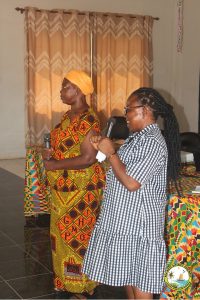


The purpose for the two days’ workshop which was to empower the executives of the various groups into the production of salt in the area so they can in turn train their members was also to enhance quality and safety of edible salt delivered by artisanal operators and to guarantee the right level of iodine in salt produced in the Ada area.
In her opening remarks, the Regional Director of Environmental Health and Sanitation Department, Madam Sybil Maria Boison expressed her disappointment in the sanitary condition at the salt production areas within the Ada West District. Madam Maria said that she arrived in Sege early from Accra and decided to tour the salt mining areas before the commencement of the workshop and was not happy about what she saw and urged the executives of the artisanal operators present at the workshop to ensure proper sanitary environment to guarantee quality salt production.
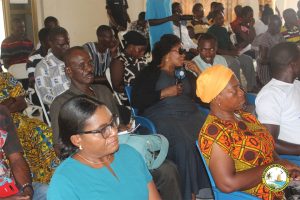


Madam Maureen Lartey, Director of Food Safety and Consumer Education of the FDA, also in her opening remarks made the point, that, sometimes when the aggregators (middlemen) bought the salt and realized that the salt does not contain the right iodine as prescribed by law, they do the iodization by themselves but that is wrong and should not be the case as it is the responsibility of salt producers to ensure the iodization of the salt in order to ensure the right quality as prescribed by law. She therefore admonished participants not to renege on their responsibility as there is a sanction regime for that per the Public Health Act, 2012, Act 851.



The Head of Food Safety Coordination and Education Department of the FDA, Mr. Seidu Umaru said that it was expected that after the two days training workshop, participants would gain improved understanding of food safety concept in salt mining which they can pass on to their people, and stressed, that enhanced knowledge in the sector would impact food safety and quality of salt produced from artisanal operation to ensure adequate iodine nutrition which would eventually protect public health and safety in Ghana. Mr. Umaru made the point that salt is food and must be treated as such for consumption and added, that this means that the producer’s environment and conduct is key in the process of salt production so that salt produced can meet the right requirement for consumption of the public. Though Mr. Umaru acknowledged the fact that many of the participants might be in the salt production business for years, he indicated that the workshop was intended to enhance their knowledge.

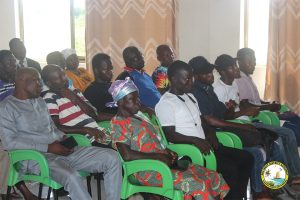

Madam Nana Akua S. Yeboah of the FDA also took the participants through Public Health Implication of Iodine Deficiency and the relevance of salt Iodization in compliance with section 107 of the Public Health Act, 2012 Act 851 which provides for “mandatory fortification of food” and indicated that lack of require iodine in salt consumed can make one to suffer iodine deficiency disorders. Madam Akua further stressed that the human body needs iodine for growth and lack of same can create problem for the body such as goiter, fatigue, affects growth of long hair among others, and added, that lack of iodine for instance in a pregnant woman can lead to miscarriage, stillbirth, birth deficiency, intellect defect inter alia and urged participants to ensure the right content of iodine in the production of salt at all times.



The participants were also taken through the concept of food safety in artisanal salt mining operation by Madam Bella R. Nkansah of the FDA within the context of food safety hazards relative to food grade salt, and by food grade salt, she meant the salt for consumption which according to her consists predominantly of sodium chloride. She also stressed on the need for salt produced to have the right content of iodine. Talking about hazards in salt production, Madam Bella said that we have three (3) types of hazards namely; biological, chemical and physical hazard, the presence of these hazards she said impact food quality and stressed that salt is considered safe only if care is taken during the production process as she took the participants through examples of the three types of hazards in salt production referred to as impurities.
Ada West District Environmental Health and Sanitation officer, Madam Millicent MacCharty on her part took the participants through the rudiments of ensuring environmental cleanliness.
Before the commencement of the workshop, participants were made to go through a pre-test exercise by reviewing fifteen (15) objective questions to ascertain their knowledge in iodization in salt production and best practice, and would be expected to take a post-test at the end of the two day training exercise which ends on Wednesday, 1st April 2026.
ISD DESK/AWDA
SEGE
Wednesday, April 1st, 2026